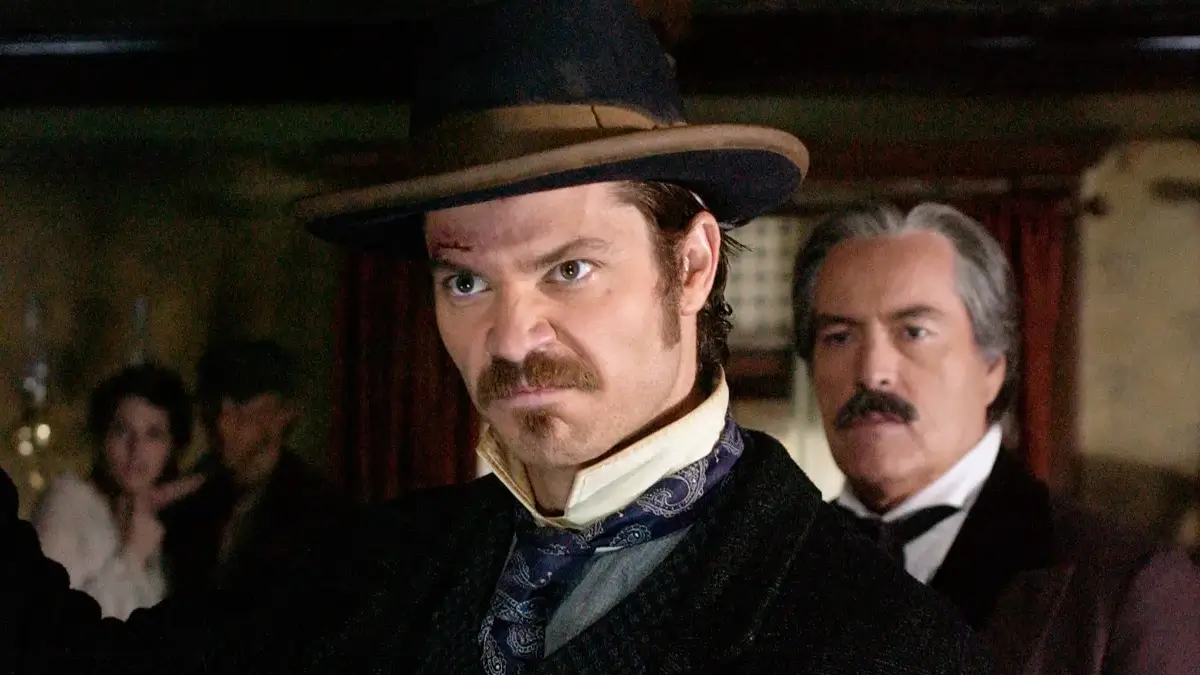

No, Deadwood Season 4 is not happening. HBO cancelled the series in August 2006 after three seasons, and the story was eventually concluded with Deadwood: The Movie, which premiered on May 31, 2019. Ian McShane, who plays Al Swearengen, was blunt about it after the film aired: “This is finite. There’s no more after this, this is it.” The movie is the official ending, and no Season 4 is in development as of early 2026.
Anyone who’s sat through all three seasons and that movie knows this story didn’t just get cancelled. It got derailed, resurrected in fragments, and then quietly closed a door most fans didn’t expect to ever open again. What follows covers every angle of the Deadwood Season 4 question that still gets searched, argued about, and misreported across the internet.
Why Was Deadwood Cancelled After Season 3?
The cancellation came down to money, creative friction, and corporate timing. Each episode of Deadwood cost HBO roughly $4.5 million to produce, making it one of the most expensive shows on television at the time. When renewal discussions began in 2006, HBO offered creator David Milch a shortened final season of six to eight episodes. Milch refused, unwilling to compress the story into that format. The show’s structure was unusually rigid: each season covered roughly two weeks of in-universe time, with each episode representing a single day. A half-season would have broken that architecture entirely.
The cast didn’t know it was coming. Actors including Timothy Olyphant and Ian McShane were renegotiating their contracts in good faith during Season 3 production, both eventually receiving raises and back pay. The cancellation announcement blindsided everyone on set.
What Happened to the Planned Deadwood Movies?
HBO and Milch agreed on June 7, 2006 to produce two two-hour TV films instead of a fourth season. The longer format would have freed the story from the day-by-day timeline constraint. But years went by. By July 2007, HBO executives put the odds of the films actually happening at just “50-50.” In October 2007, McShane told interviewers the sets were being dismantled and the movies were dead. By March 2009 he was saying on The Daily Show, plainly: “Deadwood is dead.”
In January 2012, Milch told an interviewer he didn’t think the movies would happen. It wasn’t until August 2015 that talks quietly resumed. In January 2016, HBO gave Milch the green light to write a script and in April 2017, McShane announced the script had been delivered to the network. One film, not two, eventually moved forward.
What Is Deadwood: The Movie and Does It Wrap Things Up?
Yes, Deadwood: The Movie functions as a genuine series finale. Set in 1889, thirteen years after Season 3, it reunites nearly the entire cast to celebrate South Dakota’s statehood. Production began in October 2018 on the same physical sets used for Westworld, production designer Maria Caso recreating the mining town from scratch. The film premiered May 31, 2019, and earned eight Primetime Emmy nominations, winning three.
The story resolves the Hearst conflict with Gerald McRaney returning as the now-Senator George Hearst, and gives meaningful closure to Swearengen, Bullock, Alma Garret Ellsworth, Trixie, Calamity Jane and others. Writer Nic Pizzolatto quietly contributed to the screenplay alongside Milch, which wasn’t widely reported at the time.
What Role Did David Milch’s Health Play in the End of Deadwood?
This is the detail most write-ups gloss over. Milch was diagnosed with Alzheimer’s disease in 2015, the same year talks about the Deadwood film resumed. He publicly disclosed the diagnosis in an interview with Vulture in April 2019, just before the film’s premiere. He was 74 at the time. Because of the progression of the disease, Milch took a deliberately hands-off approach during the film’s production, relying on director Daniel Minahan and co-executive producer Regina Corrado to manage day-to-day decisions.
Milch published a memoir, Life’s Work, in September 2022, covering both his gambling addiction, which resulted in roughly $24 million in debt, and his Alzheimer’s diagnosis. He has since moved to an assisted living facility in Southern California. His condition is the single largest practical barrier to any future Deadwood content existing at all.
Did HBO Actually Confirm a Deadwood Revival for 2026?
No. This was a hoax. In November 2025, viral reports claimed HBO had confirmed a Deadwood revival for 2026. The story spread quickly across social media. The site that published it issued a correction on November 13, 2025, noting the report was false. No official HBO announcement, press release, or casting call has been made regarding any continuation, reboot, or revival series as of early 2026.
What Does the Cast Say About Returning?
McShane shut the door loudest. His post-movie “this is finite” comment to The Hollywood Reporter in May 2019 was deliberate, not offhand. He added that doing something subpar would “blemish” the original. Molly Parker, who played Alma, has publicly expressed doubt that Deadwood would translate well in the current television landscape.
Timothy Olyphant has been the most open-ended. In an August 2025 interview with The Hollywood Reporter, he praised his experience revisiting past roles in general, calling reboots a legitimate creative tradition and comparing them to Broadway revivals. He said every time he’s returned to a character, it’s been “batting a thousand.” But he made no specific mention of Deadwood returning. Jim Beaver, who played Whitney Ellsworth, has said the series is essentially a closed book.
How Did the Original Cancellation Actually Happen Behind the Scenes?
The timeline is messier than most summaries suggest. There were parallel contract disputes happening between Olyphant, McShane, and HBO during Season 3 production. Both actors, not wanting to follow James Gandolfini’s publicized contract holdout on The Sopranos, continued working in good faith without finalized deals. They eventually received new contracts with back pay covering multiple episodes already filmed.
Meanwhile, co-producers Warner Media and Paramount were involved in separate profit-sharing disputes with HBO over the show’s revenue split. These behind-the-scenes corporate tensions added pressure on HBO’s decision-making at exactly the wrong moment. The combination of cost, creative disagreement, and corporate friction made cancellation the path of least resistance.
Could Deadwood Be Rebooted Without David Milch?
This is where the conversation gets complicated. Milch’s voice was so singular that the show drew direct comparisons to Shakespeare and Dickens from critics. The dialogue was not written conventionally: Milch famously dictated his scripts while lying on the floor, surrounded by writers who transcribed his words. The language, cadence, and moral architecture of Deadwood were inseparable from one specific mind.
A reboot with different writers would technically be possible. HBO owns the IP. But cast members have consistently framed their reluctance around exactly this issue: without Milch functioning at full capacity, the product would be something else wearing the name. Whether HBO would pursue that is a business question, but no casting, writing staff, or production announcements suggest that decision has been made.
Where Does Deadwood Stand in Television History?
Its reputation has only grown since the cancellation. Critics Matt Zoller Seitz and Alan Sepinwall ranked Deadwood ninth among the greatest American TV series of all time in their book TV (The Book). Seitz published The Deadwood Bible: A Lie Agreed Upon in 2022, a detailed production history. The show won eight Emmy Awards from 28 nominations across its run and earned a Golden Globe for Best Drama Series. Each episode averaged roughly 1.56 uses of the word “fuck” per minute, a statistic that became one of television’s most cited production footnotes and a surprisingly useful shorthand for the show’s uncompromising tone.
The series is routinely cited when discussing Yellowstone, Succession, and other prestige cable dramas that followed in its wake. Its influence on how television writers construct complex antagonists, specifically the Swearengen model of the amoral pragmatist as audience surrogate, is substantial and widely acknowledged.
The Real Reason Deadwood Season 4 Will Likely Never Exist
The honest answer is that the window has genuinely closed. The creative mind behind Deadwood is living with a progressive neurological disease and is no longer able to write. The cast has aged nearly two decades past their original roles, with the 2019 film already requiring careful production choices to account for that. McShane explicitly called the movie the end. The 2025 revival rumor was debunked within 24 hours.
What exists is three seasons from 2004 to 2006 and a 110-minute film from 2019 that, against long odds, actually landed. For a show whose ending was considered stolen for thirteen years, that’s a more complete story than most cancelled series ever get. The camp became a town, the characters got their reckoning, and the creative team closed the ledger. That’s the record, and it’s unlikely to change.
Up next
Keep Reading
All of Us Are Dead Season 2 Is Confirmed and Filming Is Done. Here Is Everything That Actually Matters Before It Drops
Supacell Season 2 Is Finally in Production: Here Is What We Actually Know So Far
Everything We Know About The Diplomat Season 4, Including When It Actually Arrives on Netflix